


What Are Signs a Teen Needs Therapy?
Your teenager slams their bedroom door for the third time this week. Maybe they’ve been withdrawing from family dinners, or you’ve noticed their grades slipping. Perhaps they’ve mentioned feeling overwhelmed, or you’ve caught glimpses of anxiety that seems bigger than typical teenage stress. You find yourself wondering: “Should we consider therapy?”
If you’re asking this question, you’re not alone. The mental health landscape for teenagers has shifted dramatically in recent years, and the statistics are both eye-opening and concerning.
Your Teen May Need Help With Their Mental Health, And They’re Not The Only One 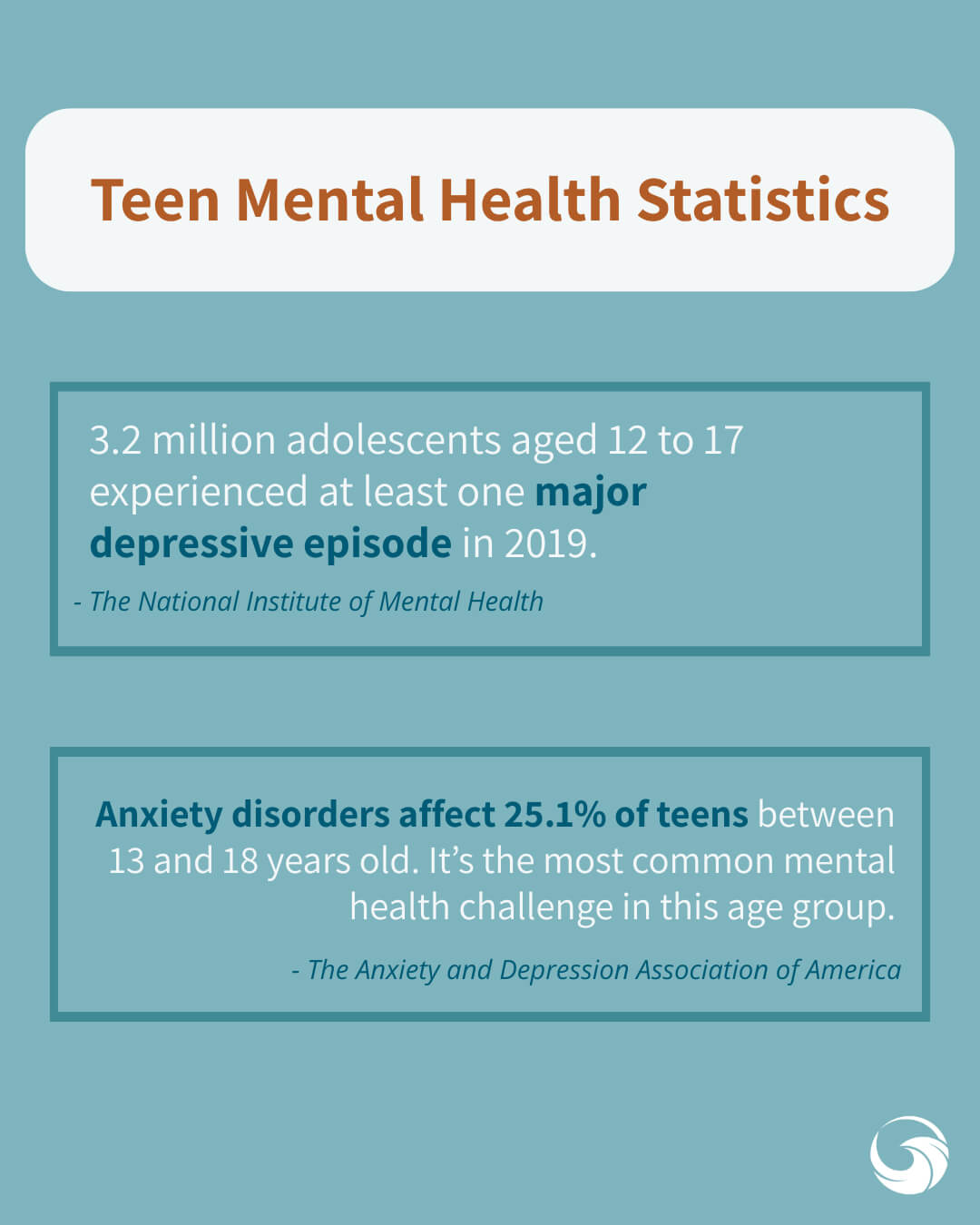
The numbers tell a story that many parents are living daily. According to the National Institute of Mental Health, approximately 3.2 million adolescents aged 12 to 17 experienced at least one major depressive episode in 2019. The Anxiety and Depression Association of America reports that anxiety disorders affect 25.1% of teens between 13 and 18 years old, making them the most common mental health challenge in this age group.
But here’s what those statistics don’t capture: the sleepless nights you’ve spent worrying, the family dinners filled with tension, or the feeling of helplessness when your once-chatty child becomes a stranger in your own home.
You know your teenager better than anyone. When something feels off, it probably is. Trusting your parental instincts and seeking professional support isn’t giving up – it’s stepping up in the most important way possible.
Why Teen-Specialized Therapists Make All the Difference
Finding a therapist who works with teenagers isn’t the same as finding one who specializes in teenagers. The difference is significant, and here’s why it matters for your family.
They Understand the Teenage Brain
Teenagers aren’t just small adults, and they’re not big children. Their brains are undergoing massive reconstruction, particularly in areas responsible for decision-making, impulse control, and emotional regulation. A teen specialist understands that when your 15-year-old makes what seems like an incomprehensible choice, there’s actual neuroscience behind it.
This knowledge translates into realistic expectations and age-appropriate interventions. Instead of expecting adult-level emotional regulation, they work with where your teen actually is developmentally.
They Speak Teen Language
Teen specialists know how to connect with adolescents in ways that feel authentic rather than patronizing. They understand the social dynamics, the pressures, and the unique challenges of growing up in today’s world – from social media pressures to academic stress to navigating identity in an increasingly complex society.
They Get the Family Dynamics
Adolescence is tough on entire families, not just the teenager. A good teen therapist understands that supporting your adolescent often means supporting you as parents too. They recognize that family relationships are shifting during this phase, and they can help navigate these changes with everyone’s wellbeing in mind.
The Foundation of Successful Teen Therapy: Confidentiality 
This might be the hardest part for you as a parent. Your teenager will have conversations with their therapist that you’ll never hear about. And that’s not just okay – it’s essential.
Why Confidentiality Matters
Think about your own teenage years. Would you have opened up about your deepest fears, embarrassing moments, or confusing feelings if you knew it would get back to your parents? Probably not.
Confidentiality creates a safe space where your teenager can explore their thoughts and feelings without fear of judgment or consequences. It allows them to work through issues that they might not feel comfortable discussing with you – not because they don’t trust you, but because they’re developmentally supposed to be individuating and forming their own identity.
Understanding the Boundaries
Here’s what every parent needs to know: confidentiality has limits. Therapists are required to break confidentiality if your teenager is at risk of harming themselves or others, or if there’s suspected abuse. These boundaries should be clearly explained to both you and your teen at the beginning of therapy.
Many therapists will also ask your teen’s permission to share general progress updates with you, or your teen might choose to bring you into sessions occasionally. The key is that your teenager has agency in these decisions.
Culturally Affirming Teen Therapy, Online and In Person in New Jersey
Respect and aptitude for navigating different cultures is a crucial aspect of providing therapy. What may be seen as problematic from the lens of one culture may be completely the norm in another. Teenagers are already dealing with so much as they figure out who they are, navigate tricky social situations, and push back against their parents. When therapists have knowledge, understanding, and/or lived experience with the cultural experiences relevant to teens, they can be more effective. Whether it is being a second generation immigrant, growing up in a mixed race family or being gender fluid, therapists should be able to meet teens where they are.
Building Your Teen’s Counseling Care Team in NJ
School
School can be a significant source of pride and support systems for teens. A good teen therapist should understand how academics, friendships and extracurriculars play a pivotal role. With this in mind, teen therapists often collaborate with your teen’s school (after discussing it with you and your teen). Your teen’s therapist can suggest and support accommodations including 504 plans and IEPs as well as addressing bullying issues or communicating with school staff.
Psychiatrist
Med management and talk therapy are the Batman and Robin of mental health care. A psychiatrist understands the brain chemistry, while a talk therapist works on challenging patterns and teaching skills. Medication can quiet the noise enough to allow for change to occur; therapy teaches you what changes to make. When psychiatrists and therapists communicate, clients get coordinated care instead of two separate treatments running in parallel. That’s the real teamwork: two providers, one case, working together.
Other Medical Professionals
Your child’s pediatrician has probably known your child most of their life. Inter-professional cooperation between your child’s pediatrician and therapist can streamline diagnosis and treatment. This way, your teen’s mental and physical health are addressed comprehensively.
Lastly, don’t be surprised by your teen’s therapist requesting to speak with your child’s gastroenterologist, allergist or other medical specialist if needed.
Involvement of Parents 
A good teen therapist should be willing to work with parents, offering guidance and support to navigate the challenges of parenting an adolescent. Teen therapists can help parents sort through where more boundaries and guidelines may be needed. Moreover they can assist parents in figuring out where your teen needs room to make their own decisions and mistakes and how you can be there as a support system and safety net. Furthermore, parenting teens can stir up intense emotions as well as unresolved issues for parents. Having an outside resource to provide recommendations or referrals can be a boon.
Your Teen Deserves the Right Support, And So Do You
Finding a good teen therapist is a crucial step in providing support and guidance to your adolescent during these challenging years. The statistics regarding the rise in mental health issues among teenagers emphasize the urgency of addressing their emotional well-being. Specialization in teen therapy, confidentiality, and the ability to work with parents and schools are key factors to consider when choosing a therapist. By asking the right questions and being proactive in seeking out the right therapist, you can help your teenager navigate the complexities of adolescence and build a foundation for a healthier future.
In Person and Online Therapy For Teens in NJ
Brave Minds offers teen therapy throughout the state of NJ. You don’t have to figure this out alone. If you’ve been noticing the signs or simply have a gut feeling that your teenager could benefit from professional support, reaching out is the most courageous thing you can do as a parent.
- Call us: Reach out at 908-224-7727 for a free consultation.
- Meet with a therapist who specializes in working with teens.
- Start the journey: Begin watching your teen grow and thrive.
Qualified Counselors For Every Stage of Life
While teen therapy is at the heart of what we do, we recognize that mental health is a family journey. We offer a range of services to support everyone in your household:
- Child Therapy – Helping younger children develop emotional tools and navigate life’s early challenges
- Individual Adult Therapy – Supporting parents and adults through stress, anxiety, life transitions, and more
- Couples Therapy – Helping partners navigate the added pressures that come with raising a teenager
- Equestrian Therapy – For teens who are experiencing anxiety and/or a traumatic equestrian related event.